


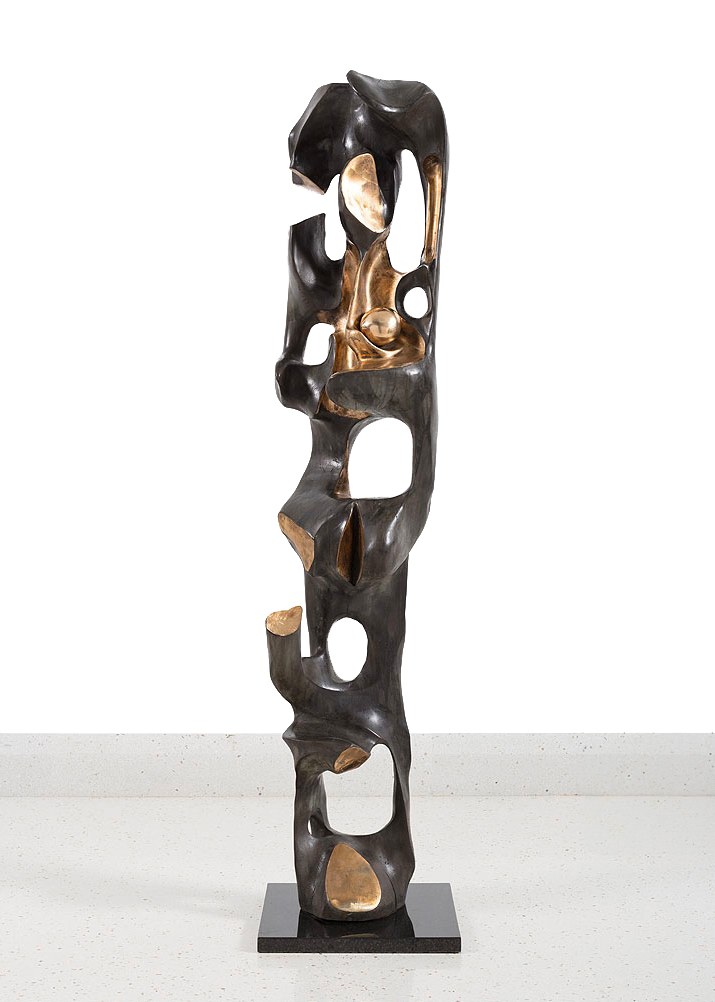
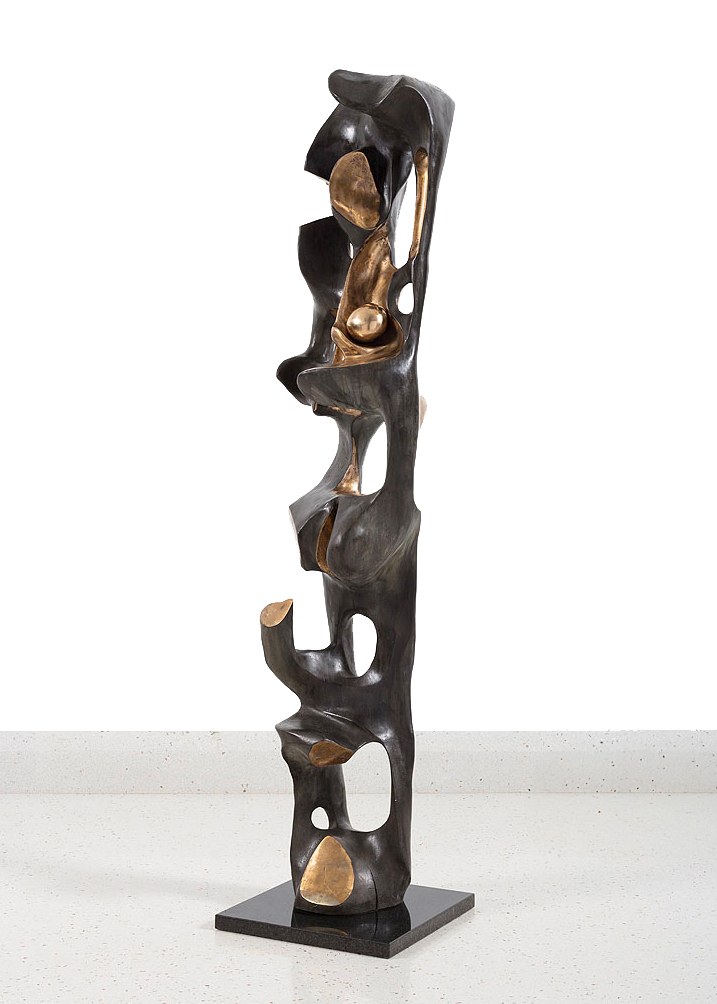
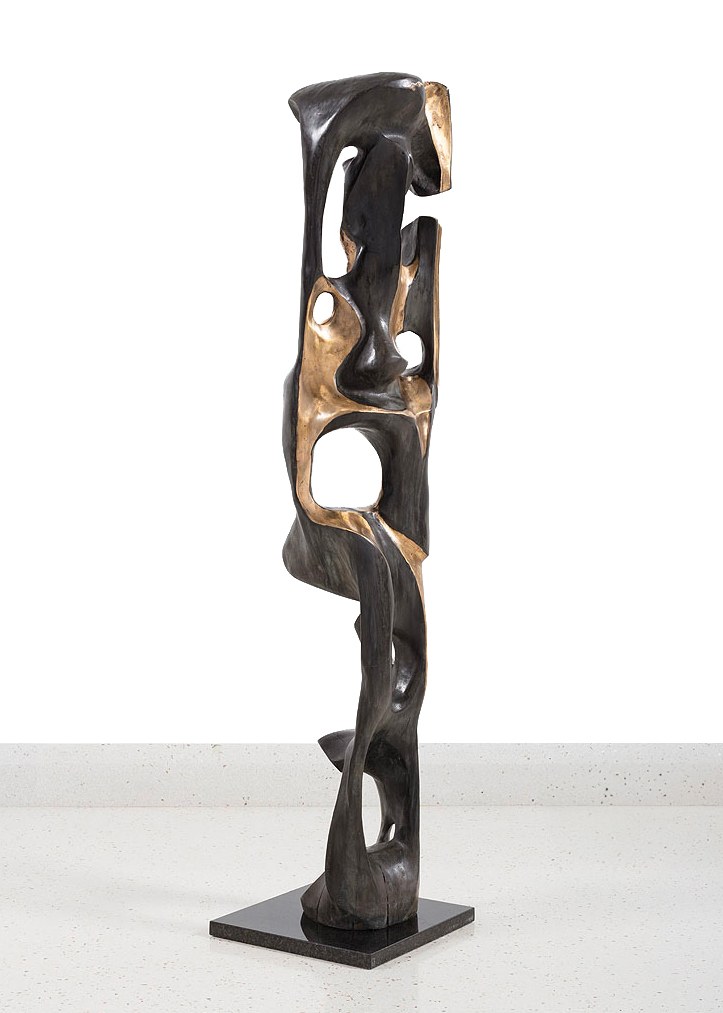
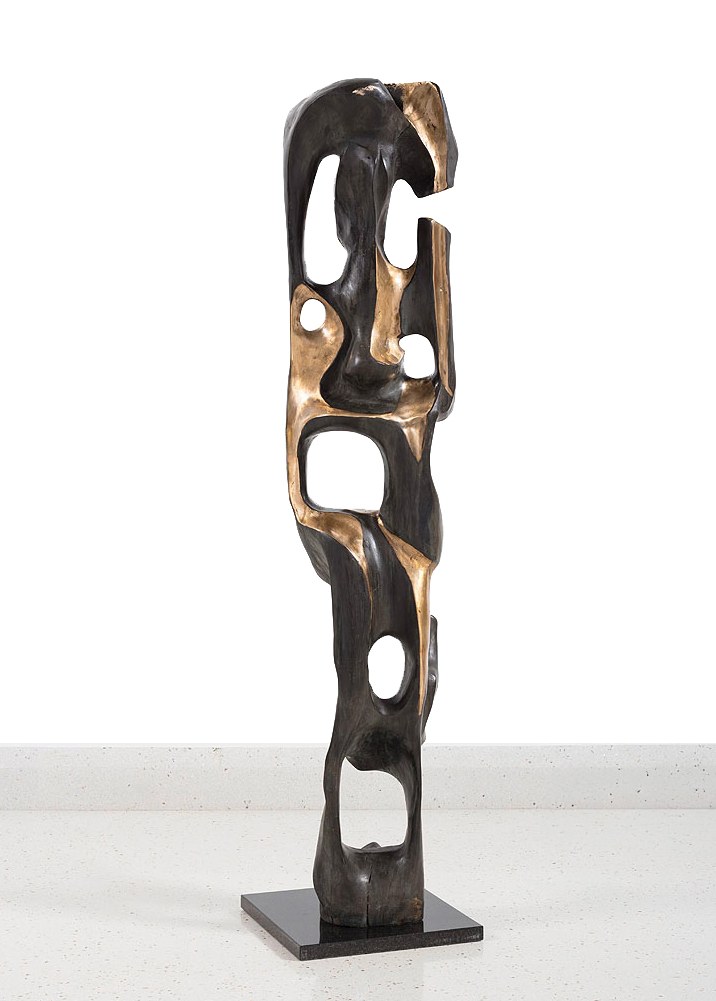
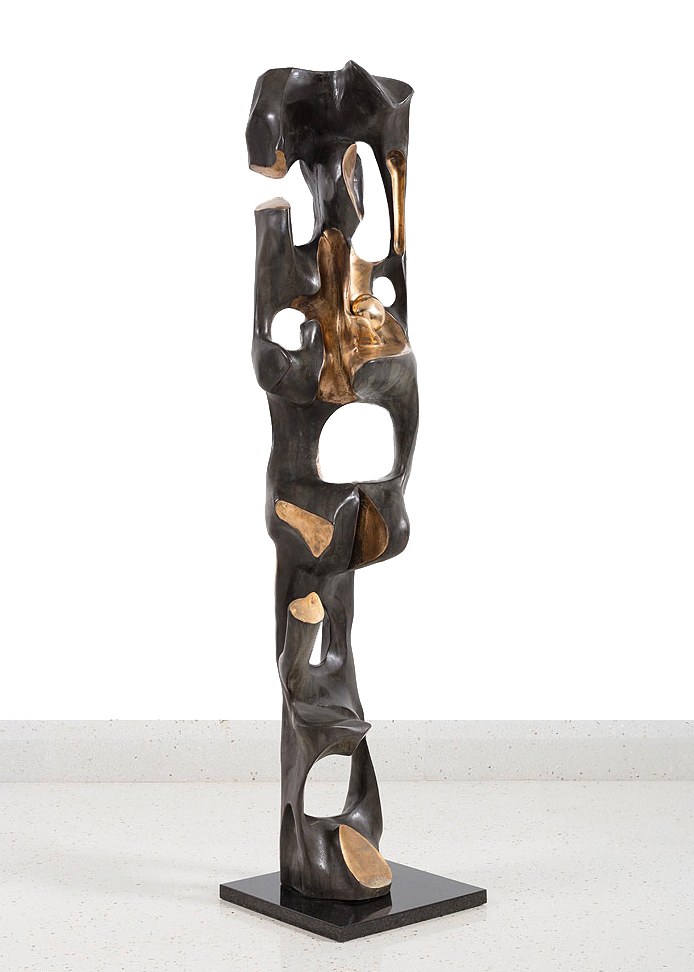
Dimensions: height 170 cm, ed. II/IV
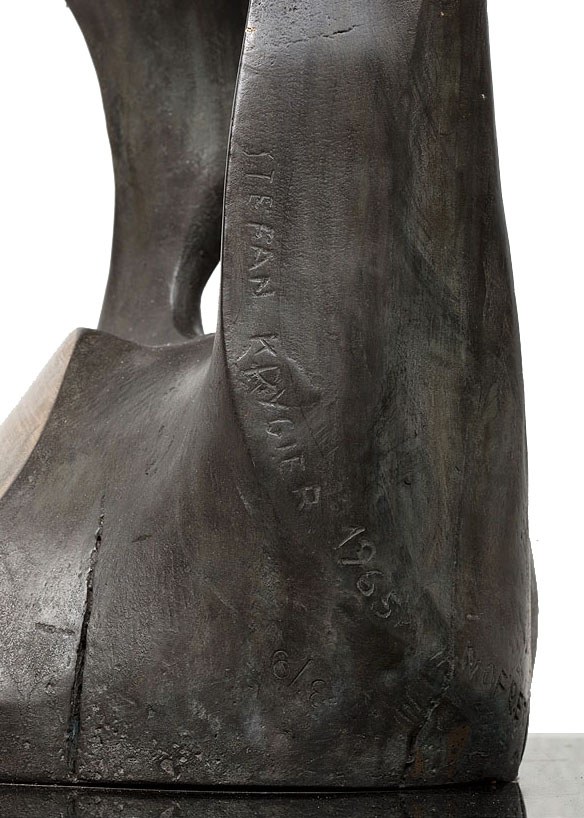
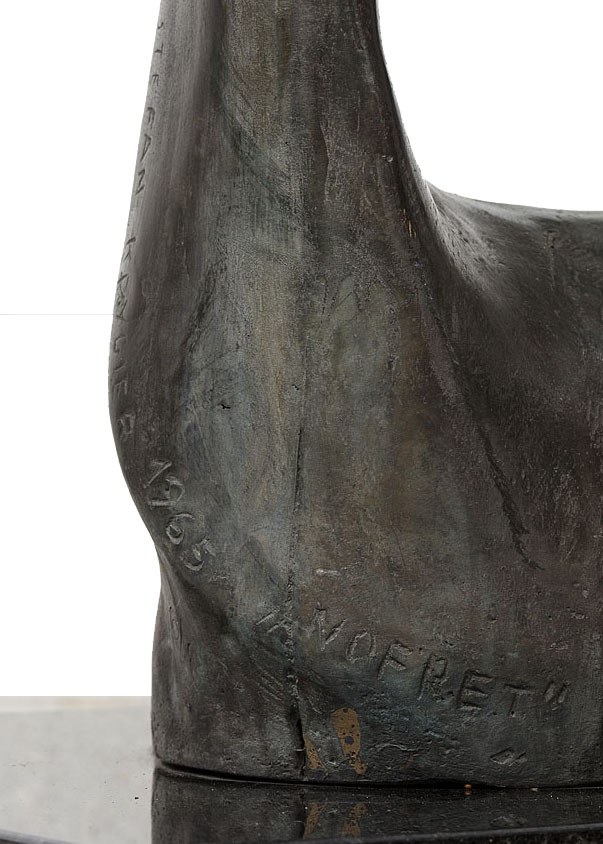
Signing: signature: STEFAN KRYGIER 1965 "NOFRET"
Stefan Krygier's art can be defined as a consistent search for new means of expression of form, which, as he pointed out, would be a pure "emanation of space." This interest in the space present in the work gave rise, among other things, to a series of works from the 1960s, in which the artist tried to translate the traditions of ancient Egyptian art into contemporary language. Krygier was particularly attracted to the mathematical sense of composition and solidity, its decorativeness and the craftsmanship of construction that characterized the works of the ancient masters.
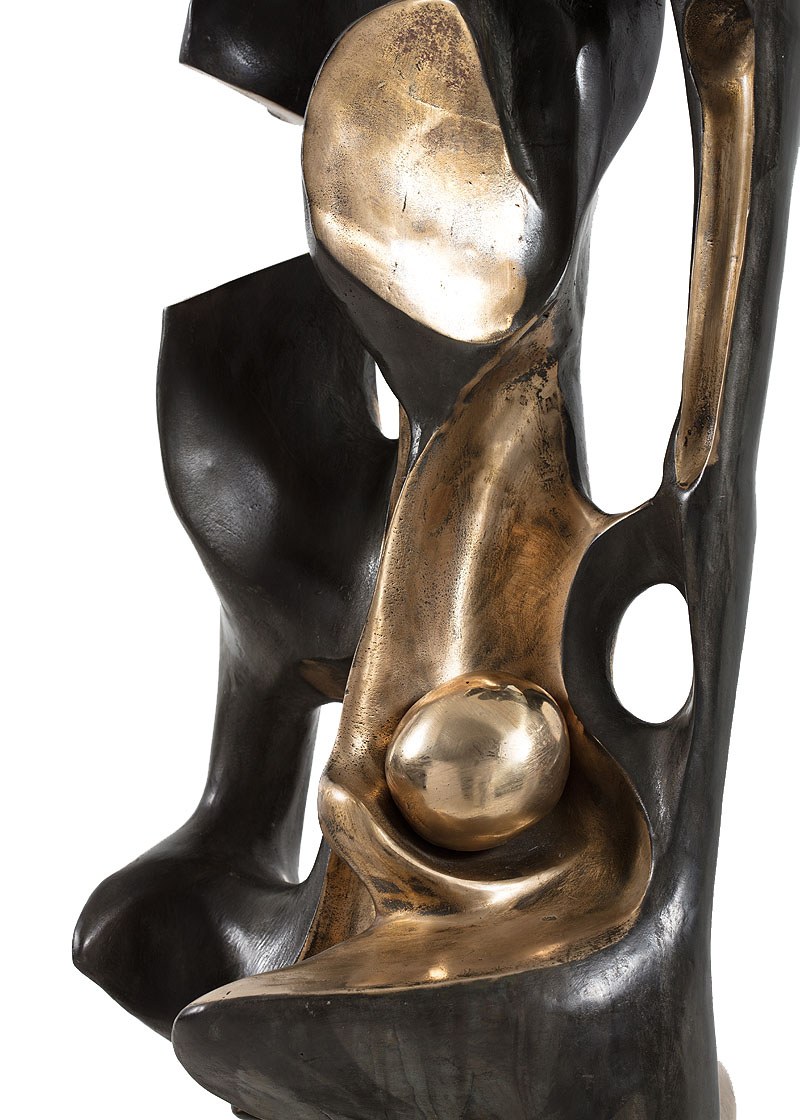
The work on offer is a bronze cast of the wooden sculpture "Nofret" made in 1965. The work is a continuation of the "Valley of the Kings" series, initiated a year earlier, and belongs to those innovative artistic forms that eluded the classical definition of sculpture and hence provoked Krygier's search for a new nomenclature. The artist preferred the term "form", which he used both in his artistic and theoretical work. Krygier's art stems from a certain continuation of the creative stance of Wladyslaw Strzeminski - it is related to the archeology of form and the study of historical forms in the perspective of their potential, strength and vitality for us here and now.
"Nofret" is one of Krygier's first spatial objects, impressing with its artistic radicalism and wisdom. The overriding value of the work is its form, to which everything is subject and which enforces the way the matter is processed. Constructed in space, the work is open to dispersion and penetration of the environment. It has its precursor in the 1964 sculpture "Nofret I," also originally made in wood, though with smaller dimensions (110 x 16 x 4 cm) and much less treatment of the depth of penetrating spaces. "Nofret" stands at the beginning of the path Krygier took to study the space in the work, its tectonics and architectonics - a study he deepened in the 1970s and 1980s in subsequent series entitled "Conflicts" and "Centers of Condensation of Form."










