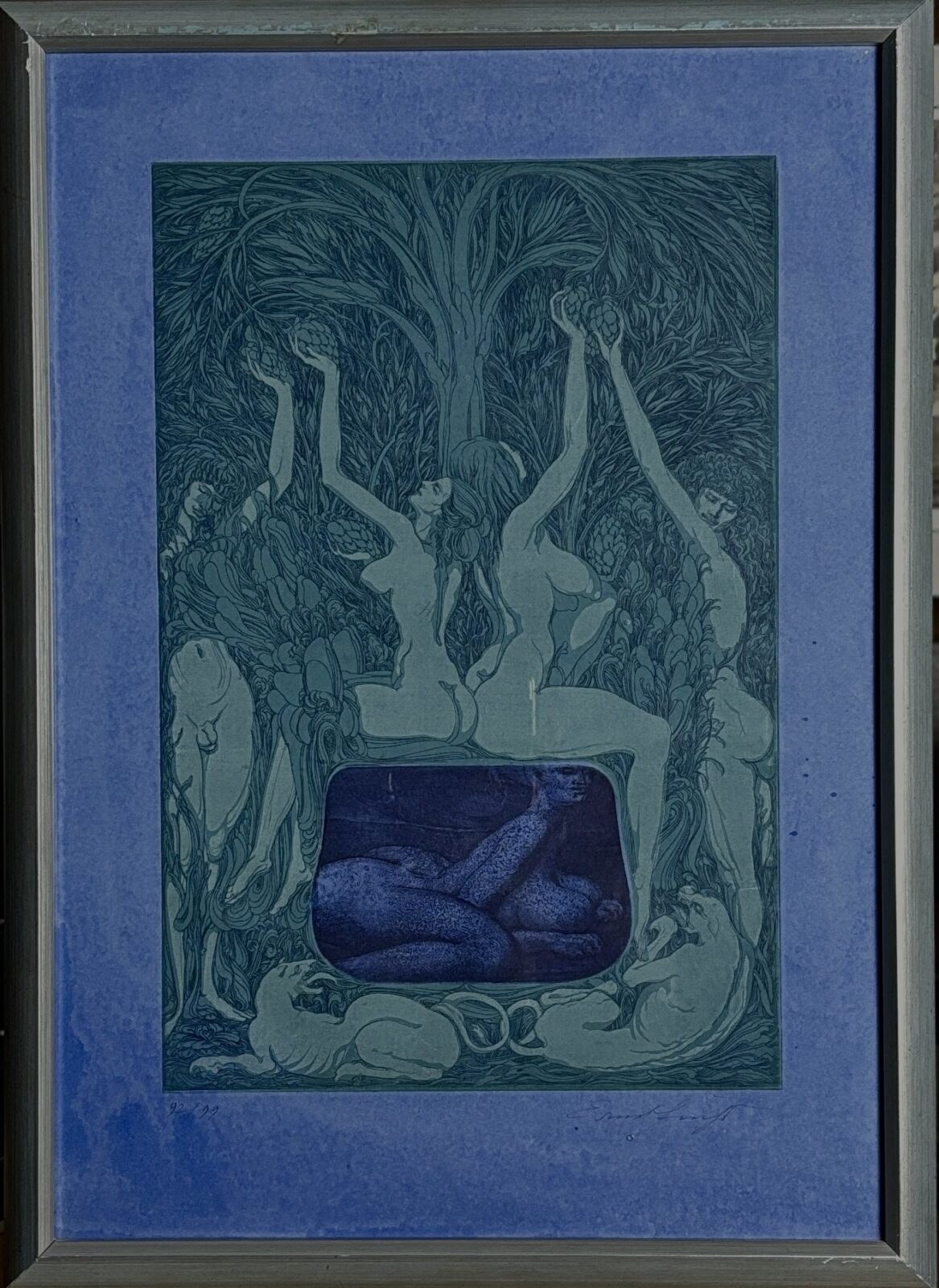
Etching, aquatint, on velin dyed sheet of paper, 45 x 30 cm plate imprint, framed 63 x 46 cm; limited edition, hand-numbered 92/99 and signed in pencil by the Author.
Ernst Fuchs is a prominent representative of fantastic realism, whose art, although sometimes controversial and intense, enjoyed great popularity and recognition, especially in the second half of the 20th century, and still has its place in the history of art in the circles of visionary art lovers.
He was one of the co-founders of the Vienna School of Fantastic Realism, a movement (founded in 1948) that combined the precise technique of the Old Masters with symbolism and fantastic, often psychedelic, subject matter.
His works were dominated by religious themes (particularly biblical themes, such as the triptych for the Rosenkranzkirche in Vienna), mythology and a strong preference for symbolism. Fuchs' works were characterized by his love of color and clean lines. In his later work, the intensity of colors and their juxtapositions were so bold that he received the nickname "Feuerfuchs" (Fire Fox), and his paintings were described as "hallucinogenic."
He was inspired by Art Nouveau (e.g. Gustav Klimt), Expressionism, the avant-garde, as well as classical painting.
Fuchs was internationally recognized not only as a painter, but also as a sculptor, stage designer (e.g. for Richard Wagner's operas) and engraver.
His work was enthusiastically received by artistic youth in the United States, who hailed him as their guru. He achieved fame and wealth. Fuchs' distinctive appearance - a lush red beard and his own decorated kepi - ensured his high visibility and gave him the appearance of a prophet.
The longevity of his popularity and legacy is evidenced by the existence of the Ernst Fuchs Museum in Vienna, located in Otto Wagner's villa, which the artist himself renovated and decorated. Fuchs also collaborated with respected companies such as Rosenthal (porcelain), extending the reach of his art beyond traditional galleries