


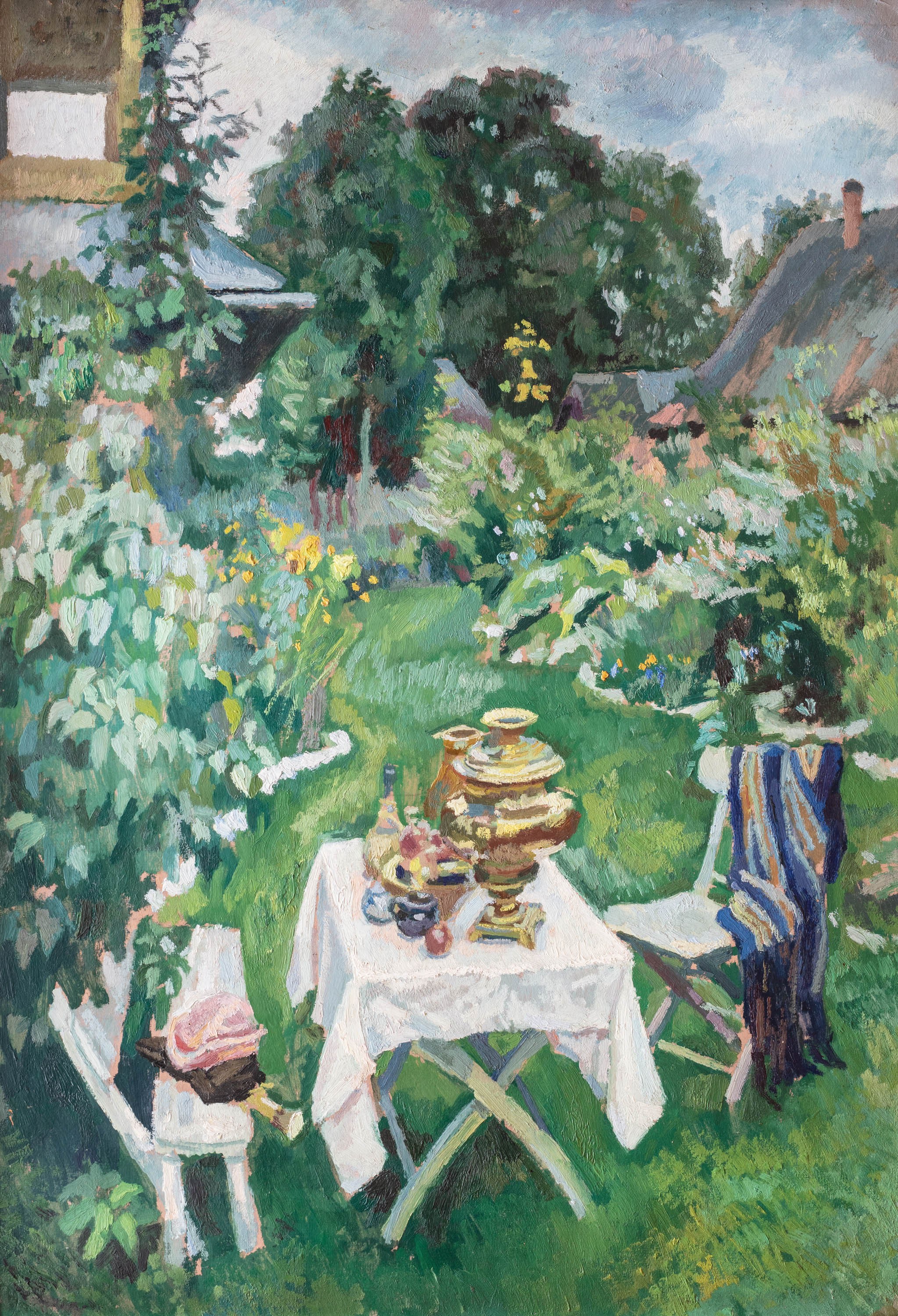
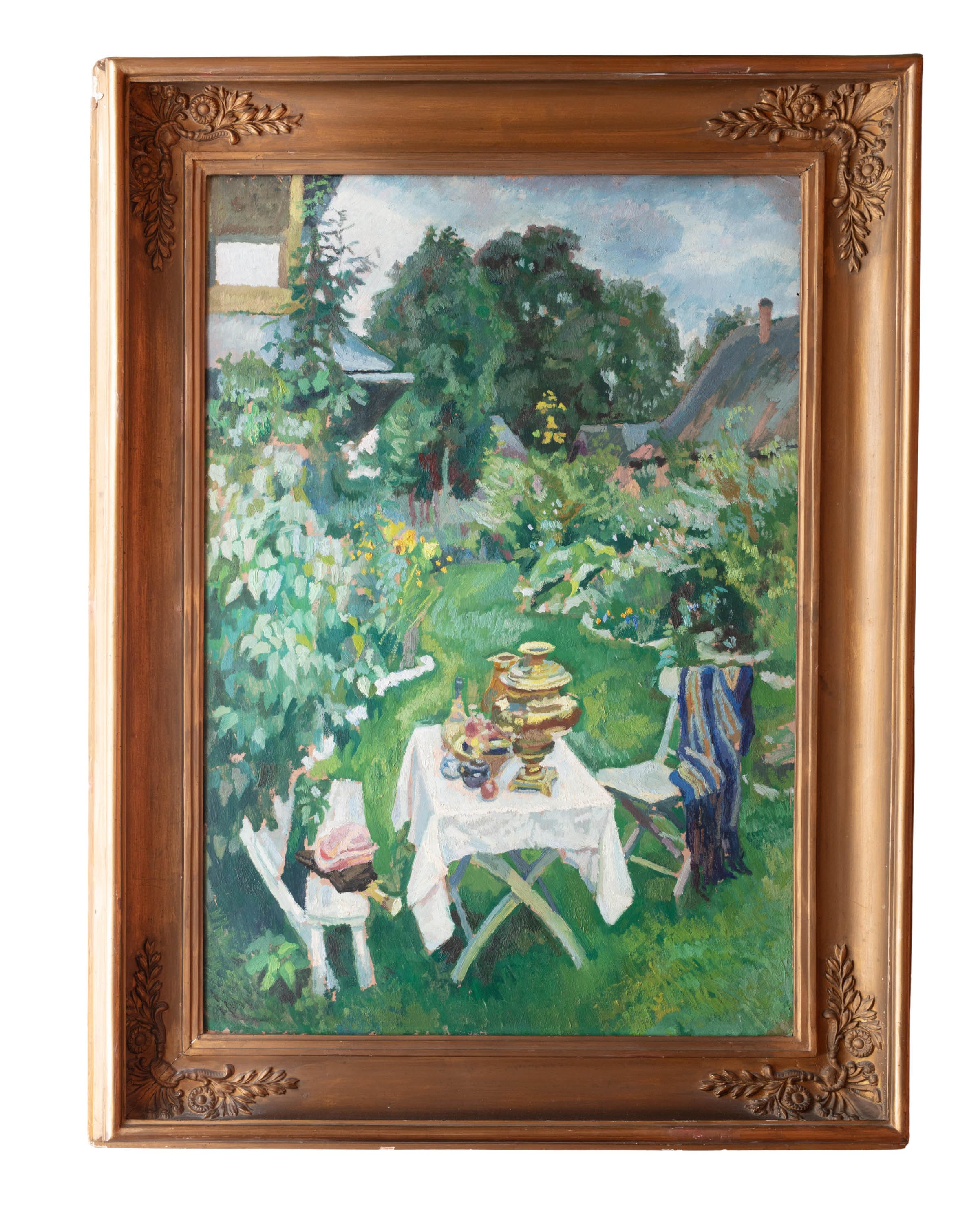
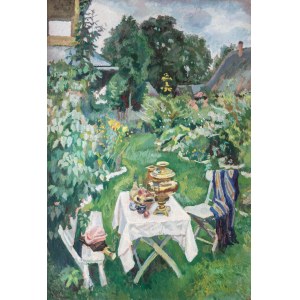
oil on cardboard, 99.5 x 69.5 cm
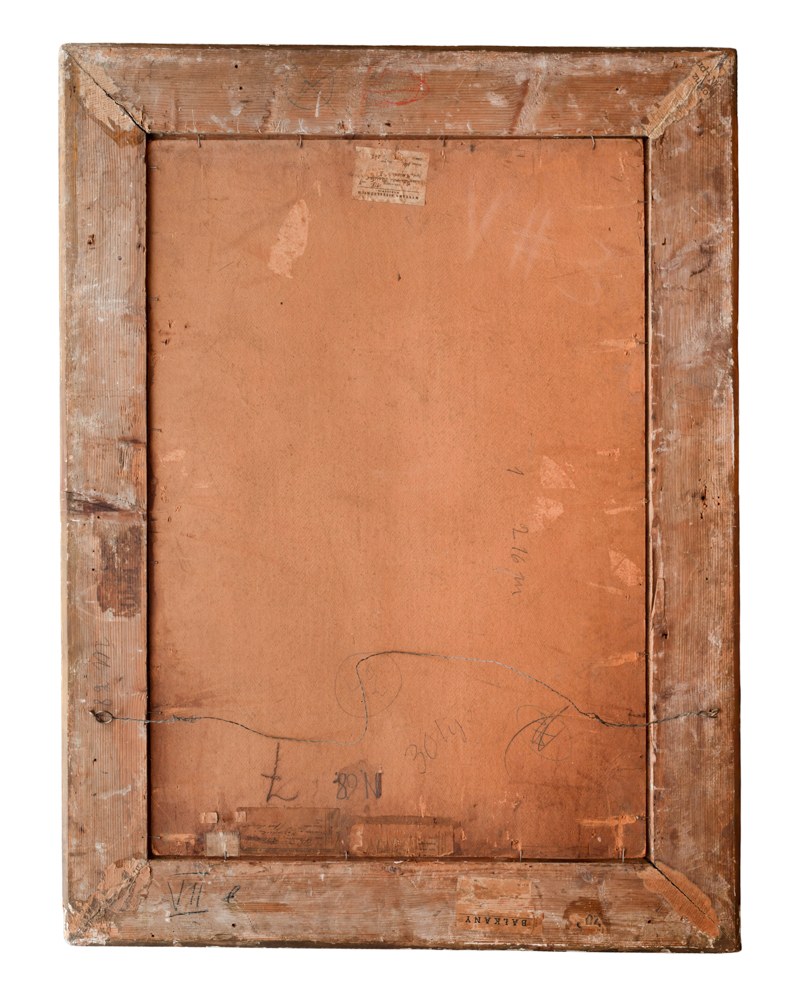
Exhibition labels on the reverse: 1. From the “Sztuka” Society of Polish Artists in Kraków; 2. Exhibition of Independent Artists in Kraków, 1927
Provenance:
- Collection of the artist Kazimierz Wąsowicz
- private collection
Exhibited:
- Exhibition of Independent Artists in Kraków, 1927
- Society for the Encouragement of Fine Arts in Warsaw, 1927
- “Sztuka” Society of Polish Artists in Kraków
- “Sztuka” Society of Polish Artists in Warsaw, 1927
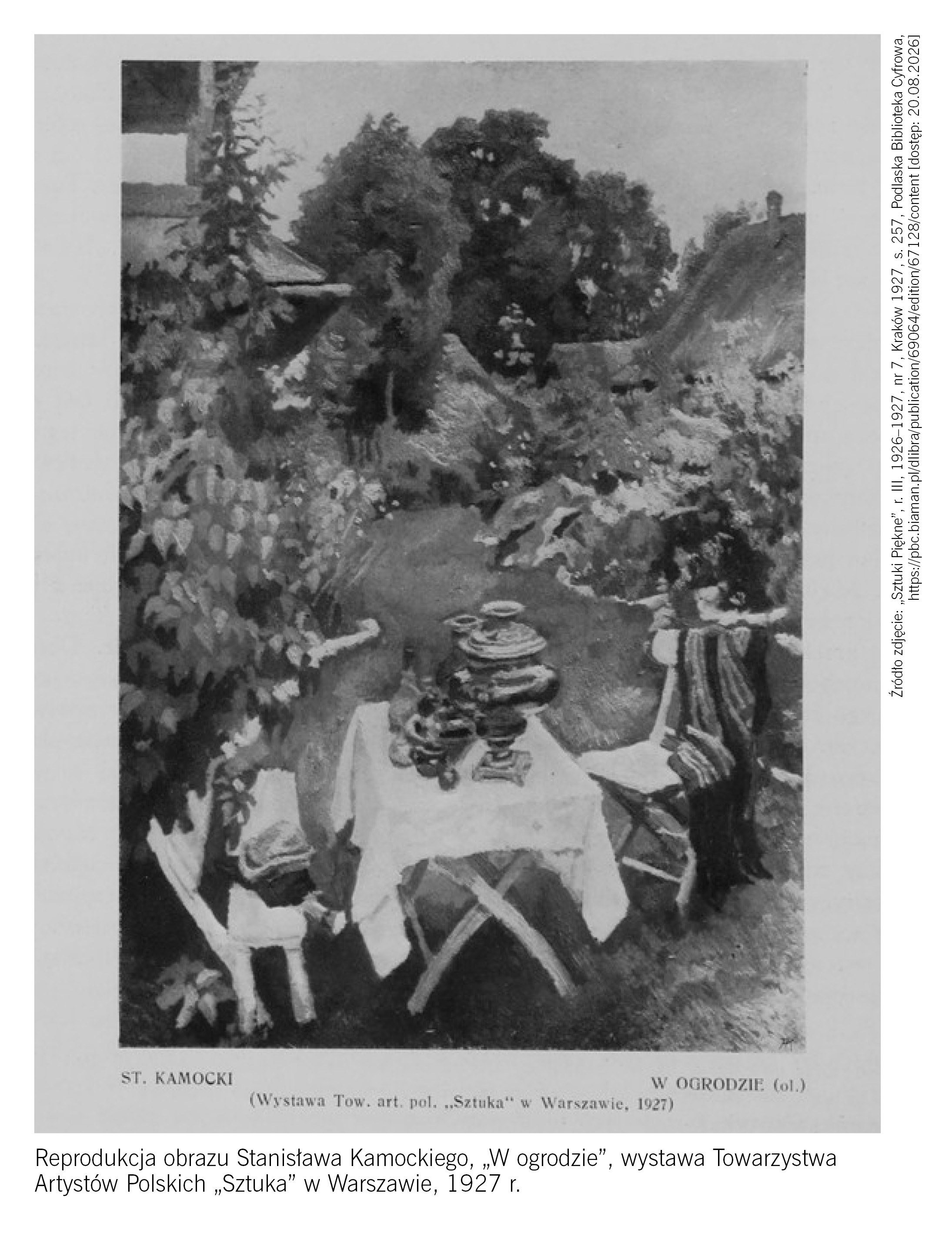
Reproduced in:
- “Sztuki Piękne,” Vol. III, 1926–1927, No. 7, Kraków 1927, p. 257
Mentioned in:
- Report of the Committee of the Society for the Encouragement of Fine Arts in Warsaw for the Year 1927, item 122, p. 41.
- Exhibition catalog of the “Sztuka” Society of Polish Artists, Warsaw 1927, p. 4
“Kamocki was Stanisławski’s most outstanding student, close to him in his love of nature, his keen sense of observation, and his emotional connection to the Polish countryside. Fields of grain, potato patches, haystacks, trees, manor houses, and rural churches, viewed at different times of the year, are the general themes of his paintings.” (J. Lazar, I. Żera, “Kamocki Stanisław Józef Juliusz” in: “Dictionary of Polish and Foreign Artists Active in Poland: Painters, Sculptors, Printmakers,” Vol. III H–Ki, Wrocław 1979, p. 336) During his studies, while training under the guidance of Jan Stanisławski, he was awarded a silver medal every year. In 1919, he took over the chair of landscape painting at the Academy of Fine Arts in Kraków. As a teacher, he continued his mentor’s educational program, developing the Kraków school of landscape painting and organizing plein air trips with his students. He himself also painted in the great outdoors, seeking subjects for his future works as he wandered from village to village. He visited, among other places, Podolia, Volhynia, and Spisz, but the regions of Kraków and Podhale provided him with particular inspiration.
“A profound sensitivity to the beauty of nature, a love for that nature, a pantheistic attachment to it and an understanding of its mysteries, a poetic attitude toward it filled with a kind of pious wonder, keen observation and the ability to experience the moods that nature offers so abundantly at every hour of the day—all of this will contribute to a body of work imbued with mature masculinity, already conscious of its goals and means. Yet in this good man and eternally self-critical artist there will remain a certain trace of unfulfilled longing, of what remains unsaid, and hesitation, as if he were still waiting for that moment when he will catch a glimpse of the longed-for echo of nature’s secret language, which is remarkable in that it confides itself every day. And therein lies Kamocki’s distinctiveness, his charm—and his promise for the future.” (Schroeder, Stanisław Kamocki, “Sztuki Piękne” 1927/1928, p. 427.)
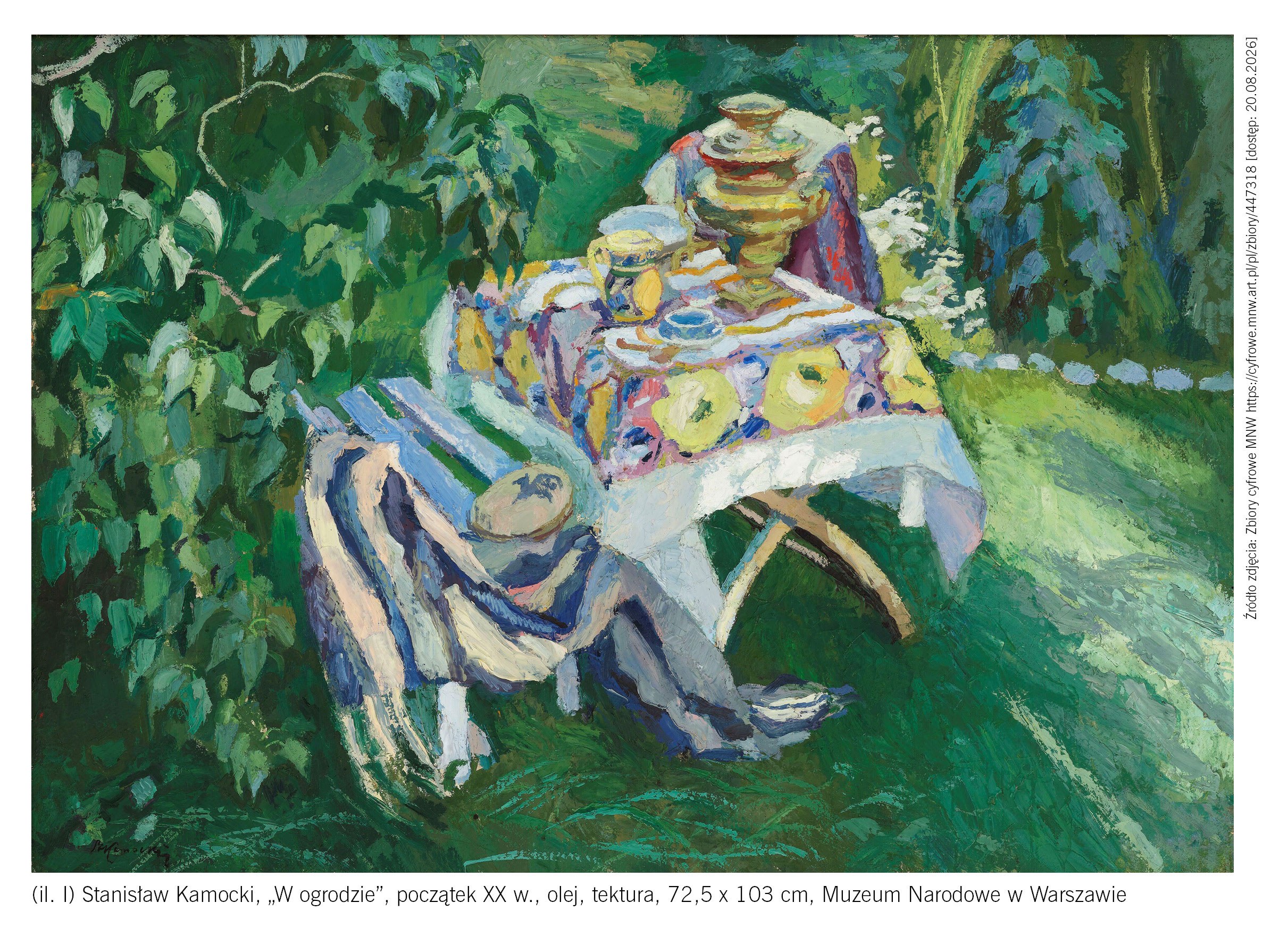
A work with a similar samovar motif, titled “In the Garden” and dating from the early 20th century, is in the collection of the National Museum in Warsaw (ill. I)










Останній перегляд
Увійти, щоб побачити список лотів
Обране
Увійти, щоб побачити список лотів