


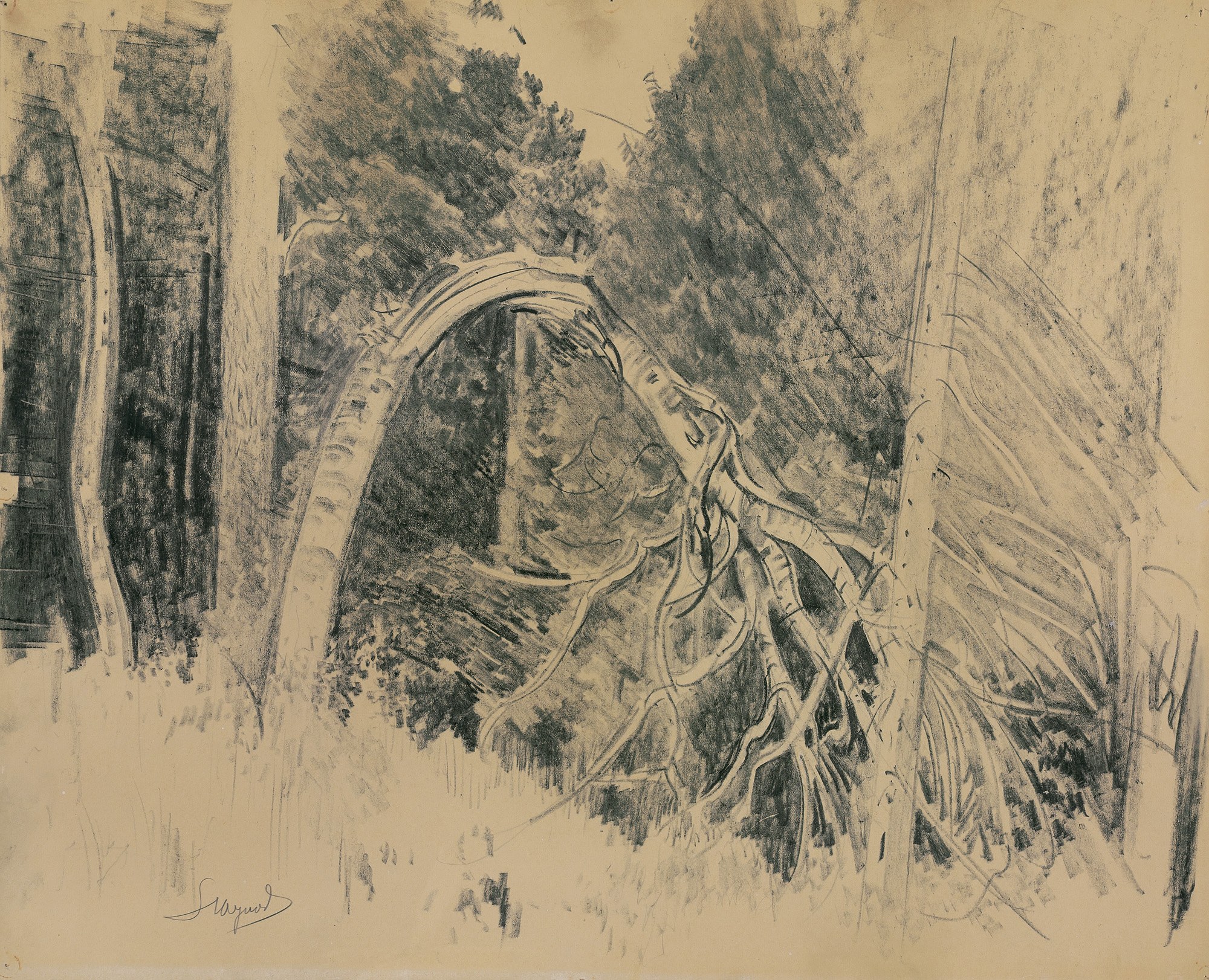
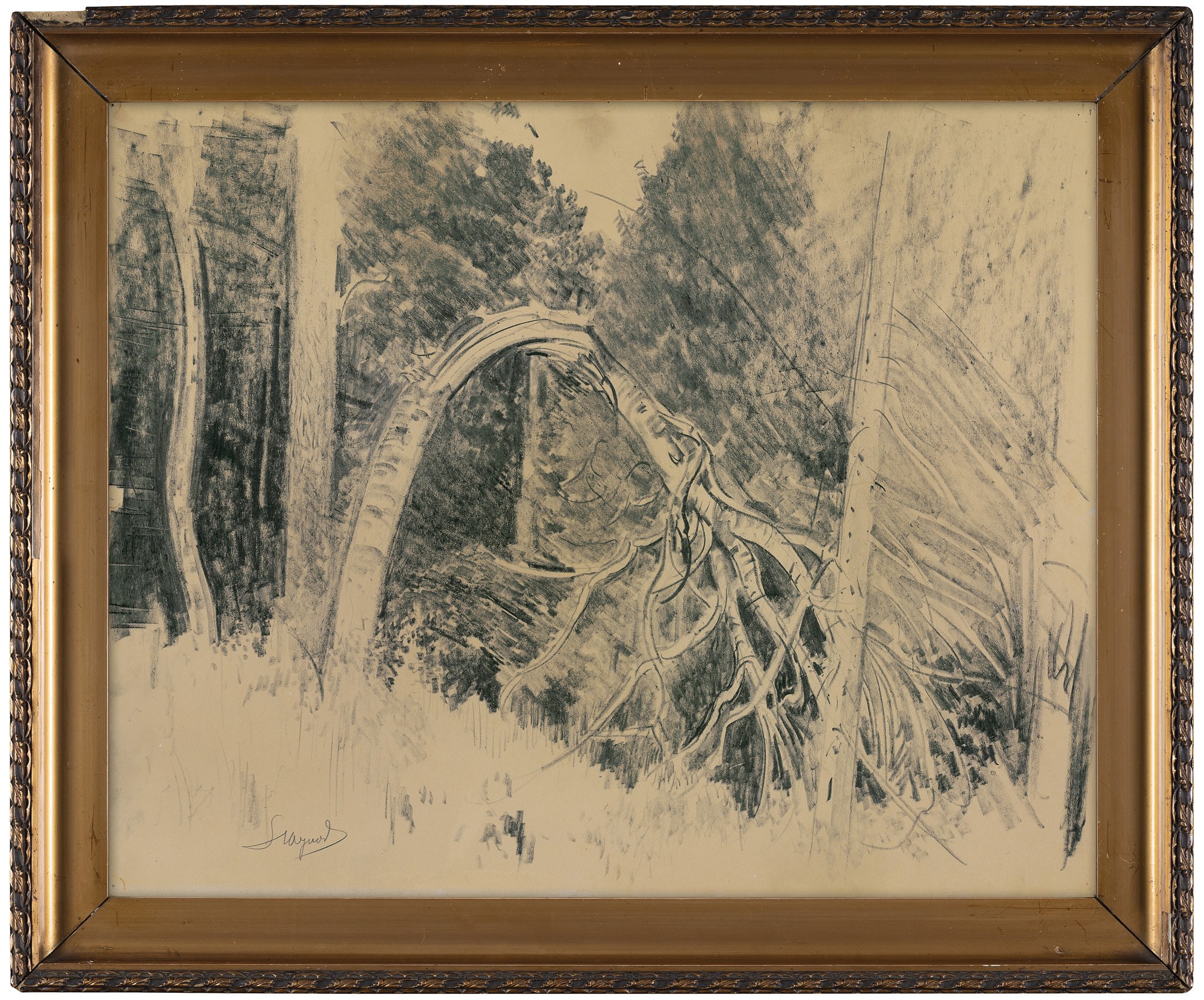

39.2 x 48.2 cm - pencil, colored pencil, paper
signed lower left: LWyczół [linked initials]
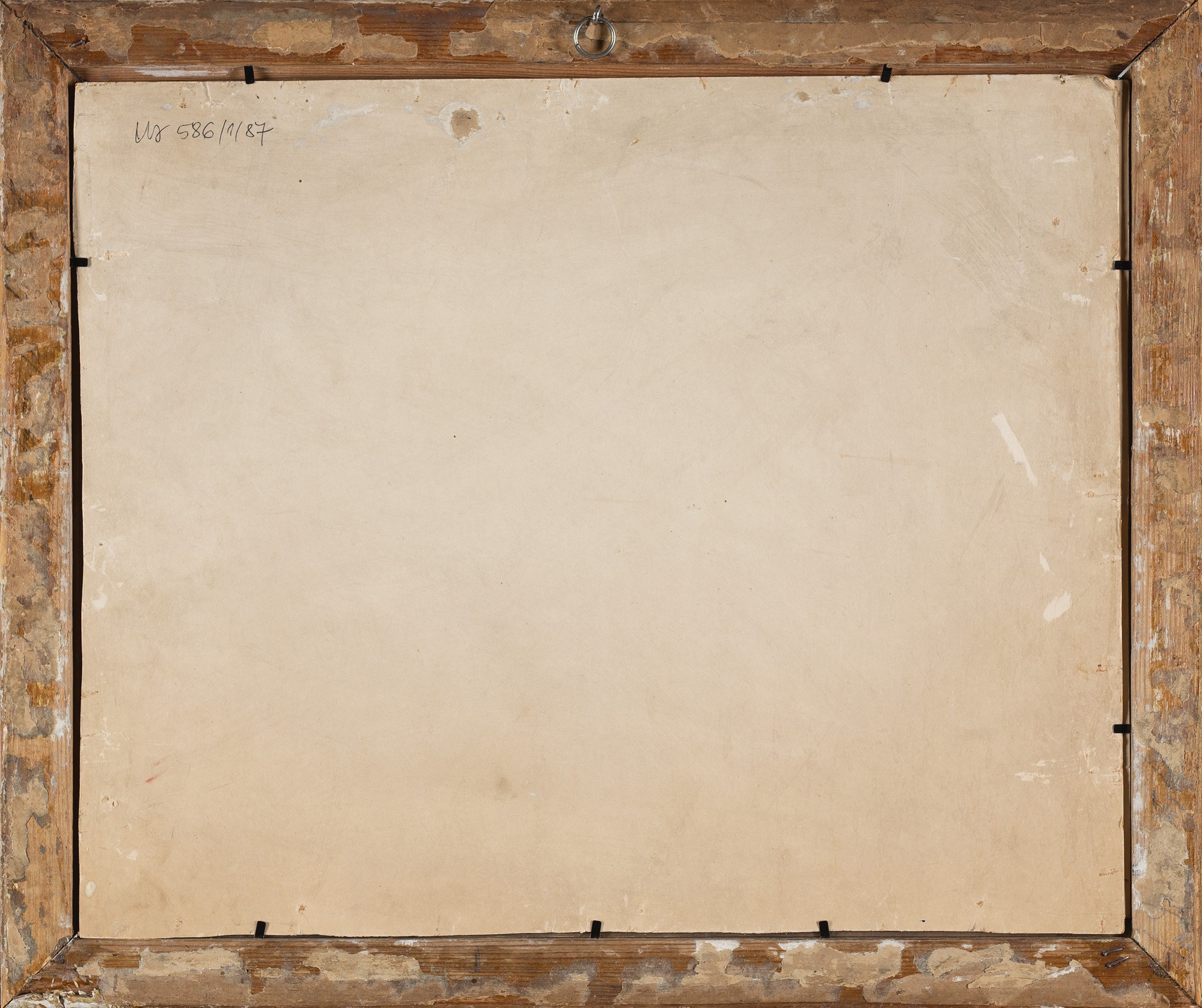
Traces of thumbtacks in the corners; on the reverse, a number (in pencil): 32.
Leon Wyczółkowski’s crayon drawings constitute a unique collection in which the artist depicts tree motifs with unparalleled sensitivity. Although Wyczółkowski was a master of many techniques, it was the crayon—including lithographic crayons, colored pencils, and pastels—that allowed him to masterfully capture the atmosphere and color impressions and translate them onto paper.
Unlike oil paint, chalk enabled Wyczółkowski to quickly jot down his observations and emotions. Its dry, matte texture was also ideal for rendering the rough bark of trees, cracked trunks, and delicate leaves. The artist applied layers of crayon to the paper, building depth in the image by utilizing the natural tone of the paper’s surface. Wyczółkowski often employed a sketching technique, where he did not aim for perfect representation but rather to capture the atmosphere.
Leon Wyczółkowski’s crayon drawings are proof that even the simplest techniques can be used to create works of immense expressive power, imbued with deep symbolism and a personal relationship with nature.
Leon Wyczółkowski (Huta Miastkowska near Siedlce, 1852 – Warsaw, 1936) —a painter, printmaker, and educator—was one of the most outstanding Polish artists working at the turn of the 19th and 20th centuries. He began his artistic studies in the Drawing Class in Warsaw under the guidance of Wojciech Gerson and Aleksander Kamiński (1869–1873), then continued them at the Academy of Fine Arts in Munich under Aleksander Wagner (1875–1877), in Kraków under Jan Matejko (1877/78), and during two trips to Paris (1878 and 1889). After completing his studies, he settled in Lviv, later moving to Warsaw. He spent the years 1883–1893 traveling through Ukraine and Podolia. In 1895, he moved to Kraków after being appointed a lecturer at the local School of Fine Arts. In the following years, he traveled extensively—to Italy, France, Spain, the Netherlands, and England. He was among the founding members of the “Sztuka” Society of Polish Artists. He exhibited extensively both in Poland and abroad. He spent the years 1929–1936 in Poznań and Gościeradz, commuting to Warsaw, where (from 1934) he headed the Department of Graphic Arts at the Academy of Fine Arts. He painted landscapes, portraits, genre scenes, still lifes, and flowers. He frequently used pastels and watercolors; he was an outstanding printmaker and also worked in sculpture.













Recientemente visitadas
Inicie sesión para ver la lista de lotes
Favoritos
Inicie sesión para ver la lista de lotes