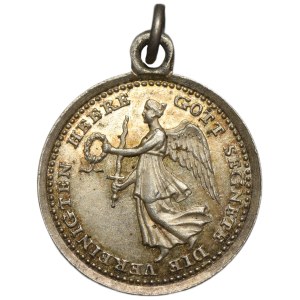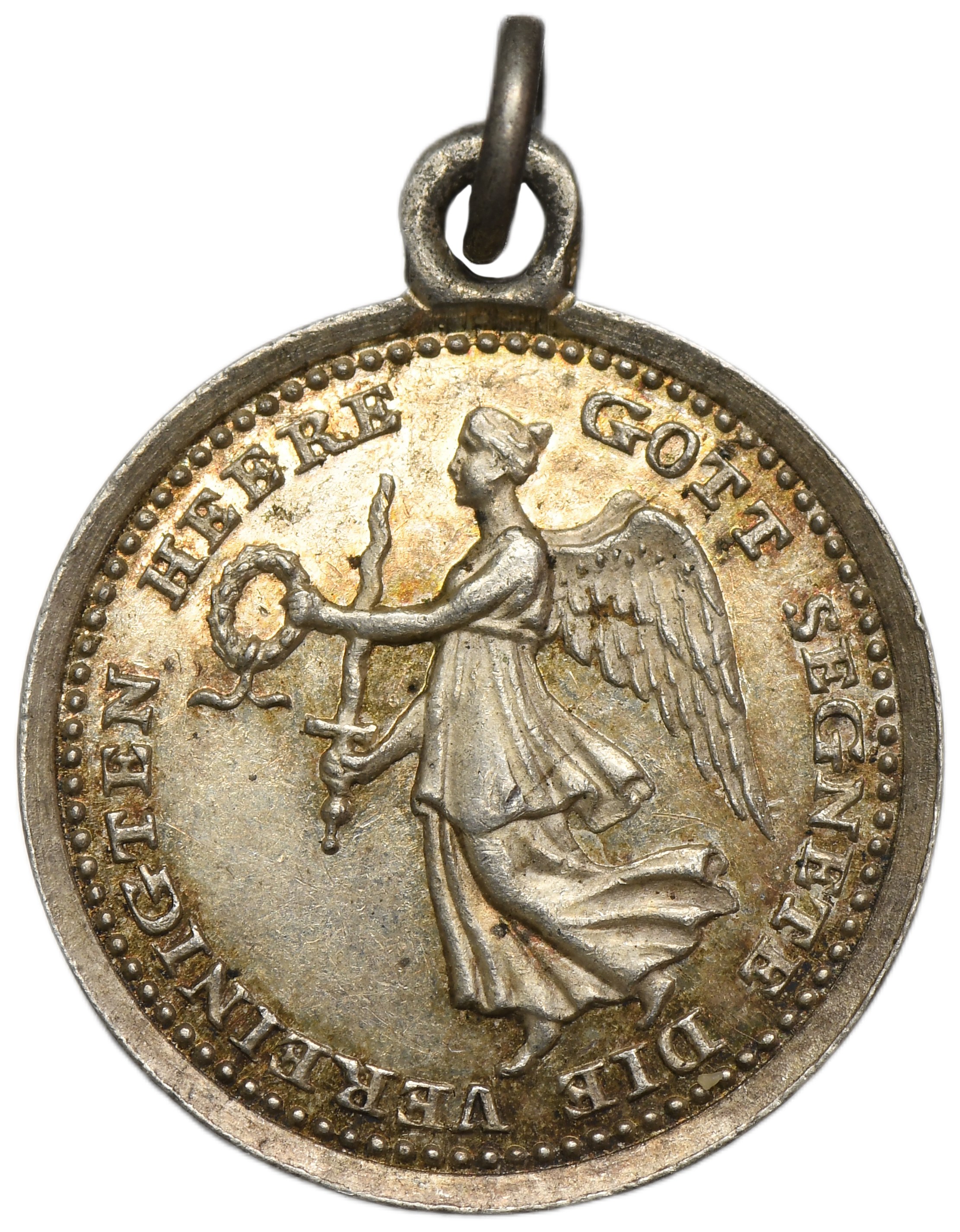
A small silver commemorative medal, known as a Siegespfennig, struck to commemorate the Allied operations near Troyes on 3 February 1814. Designed by Daniel Friedrich Loos, it belongs to a series of miniature medals celebrating Allied victories over Napoleon’s forces.
These operations followed the Allied victory at La Rothière on 1 February 1814. Napoleon’s defeated army withdrew towards Troyes, pursued by the Russian corps of Prince Peter Wittgenstein and the Austro-Bavarian corps commanded by General Karl Philipp von Wrede.
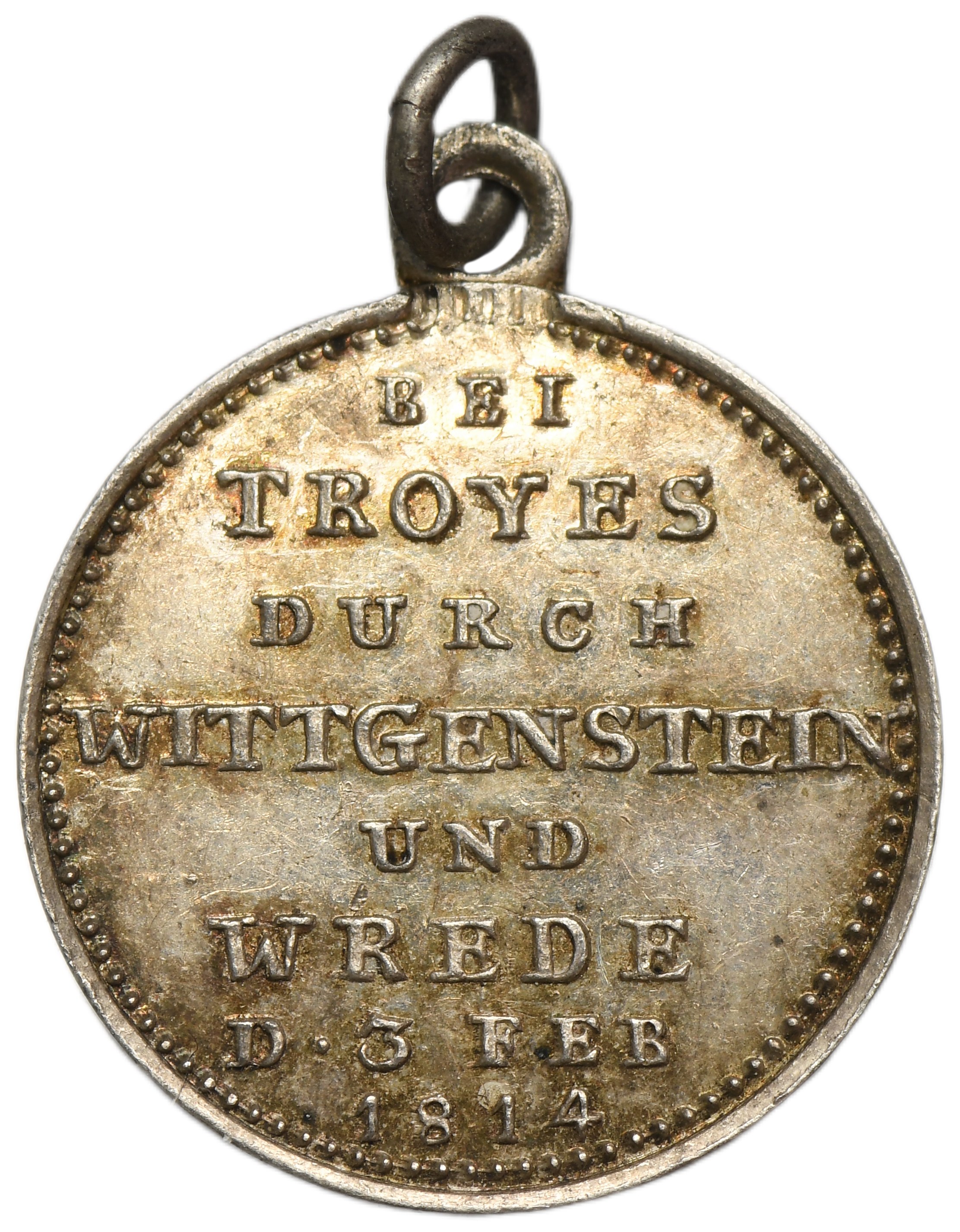
The inscription attributes the victory near Troyes to these two commanders and gives the date 3 February 1814, when the retreating French troops reached the city and the Allies continued their pursuit. The main French forces left Troyes several days later, and the city was occupied by Allied troops on 7 February.
The medal should not be associated with the later Battle of Laubressel, fought near Troyes on 3 March 1814, despite the coinciding day of the month and the involvement of Wittgenstein’s and Wrede’s corps.
The obverse depicts the winged goddess Victory holding a flaming sword and a laurel wreath. The legend GOTT SEGNETE DIE VEREINIGTEN HEERE translates as “God blessed the united armies.”
Fitted with a suspension loop and ring.
An interesting memento of the 1814 campaign in France, commemorating Wittgenstein and Wrede’s pursuit of Napoleon’s army following the Allied victory at La Rothière.
Obverse: winged Victory holding a flaming sword and a laurel wreath
GOTT SEGNETE DIE VEREINIGTEN HEERE
Reverse: inscription
BEI / TROYES / DURCH / WITTGENSTEIN / UND / WREDE / D. 3 FEB. / 1814
Silver, diameter 15 mm, weight 1.35 g