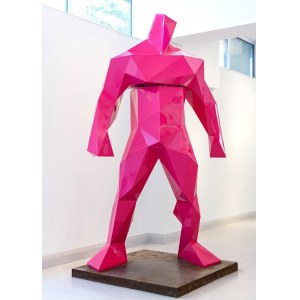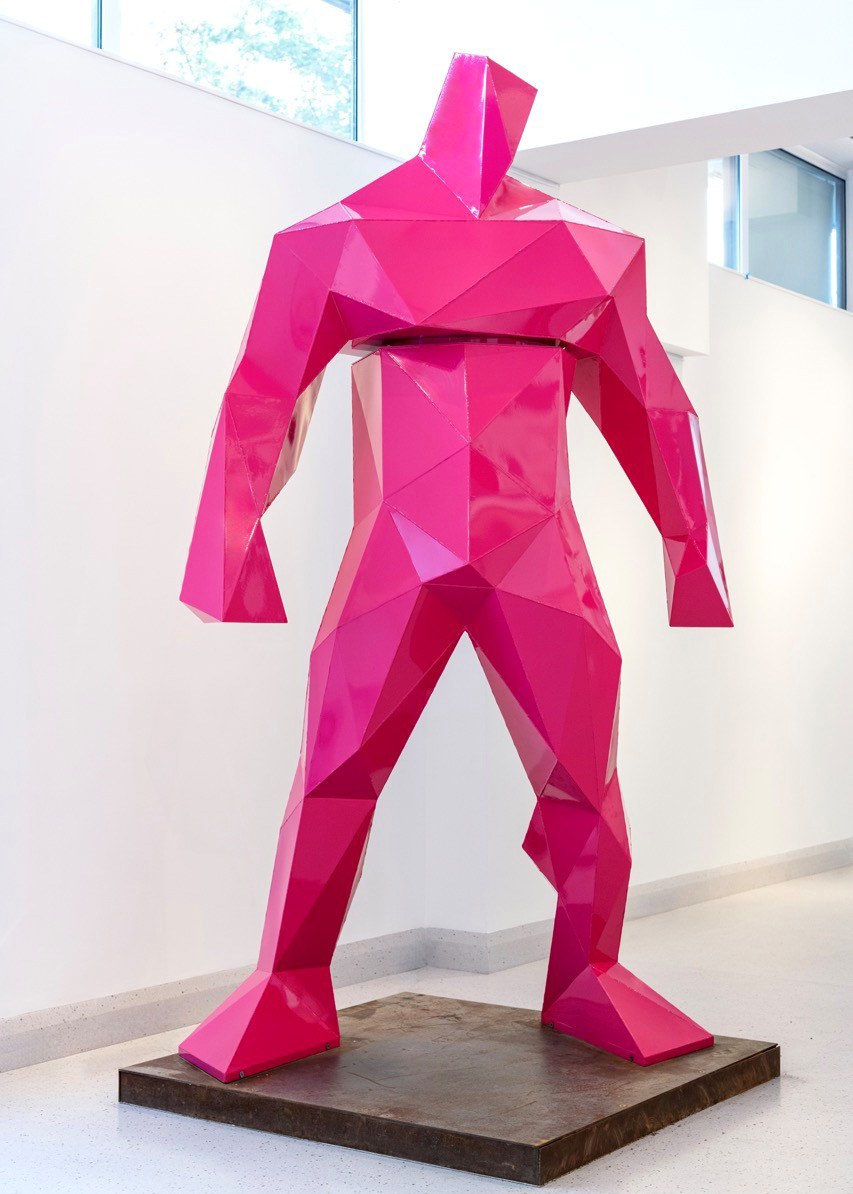
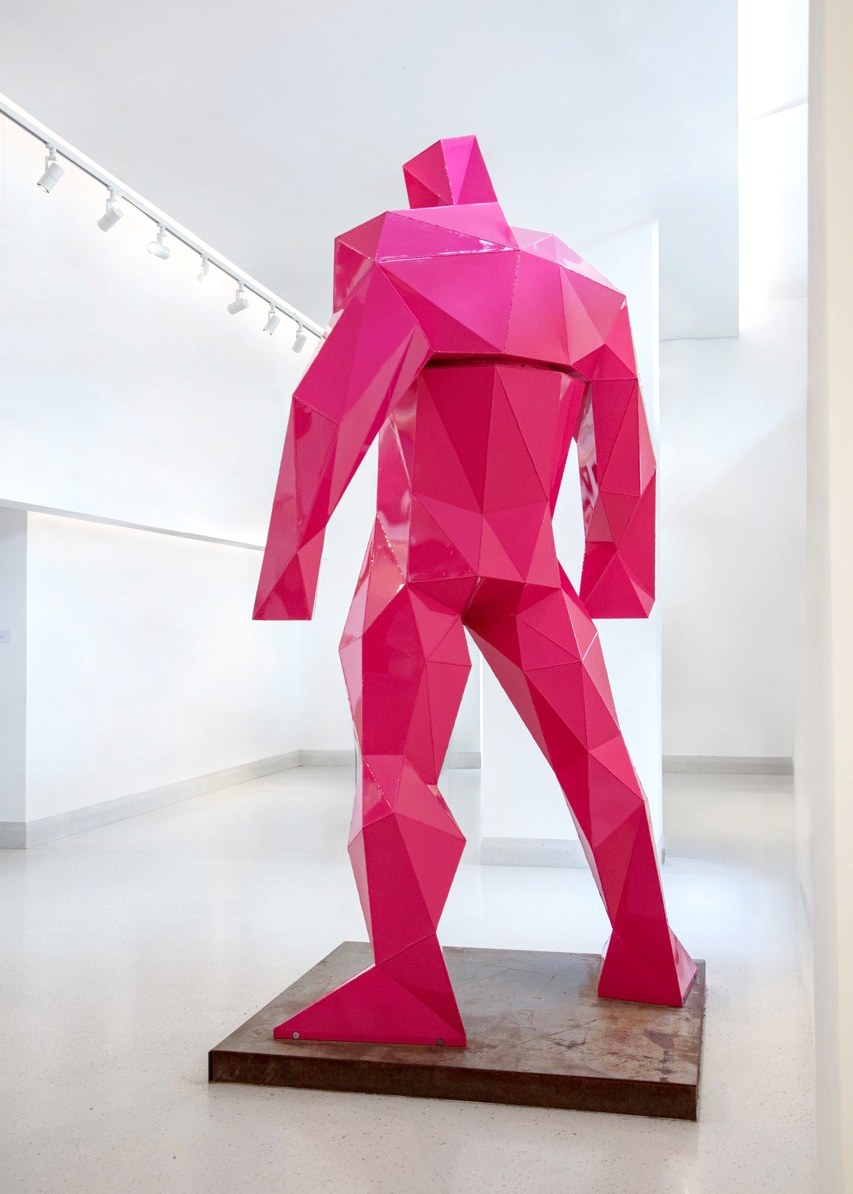
Dimensions: 315 x 185 x 85 cm (height with base: 325 cm), ed. 5/7
Signature: signed on the artist’s plaque: PAWEL MAX ORLOWSKI / PINK BOT / 2023 / ED 5/7
Provenance
Warsaw, private collection.
Exhibited
Warsaw, Museum of King Jan III’s Palace at Wilanów, PINK BOT, OMENA Art Foundation, April–May 2026. Ćmielów, post-industrial porcelain factory halls, PINK BOT installation, 2026. Van Rij Gallery, June 2025–March 2026. Katowice, Silesian Museum in Katowice, PINK BOT. Paweł Orłowski, Oct. 26, 2024–May 25, 2025. Radom, Mazovian Center for Contemporary Art “Elektrownia,” PINK BOT. Paweł Orłowski, May 18, 2024 – September 29, 2024.
Reproduced from
Rij K., PAWEŁ ORŁOWSKI PINK BOT, published by the Mazovian Center for Contemporary Art “Elektrownia” in Radom, Radom 2024, unnumbered pages.
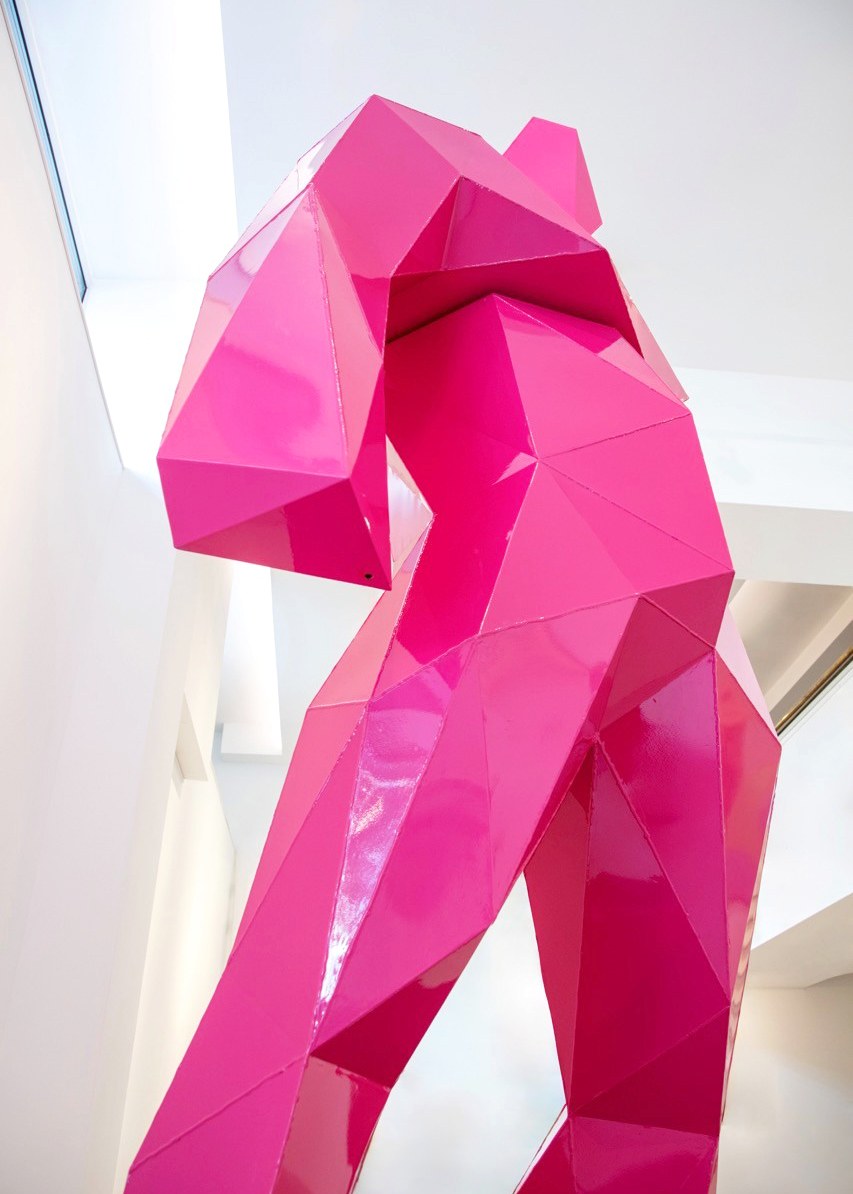
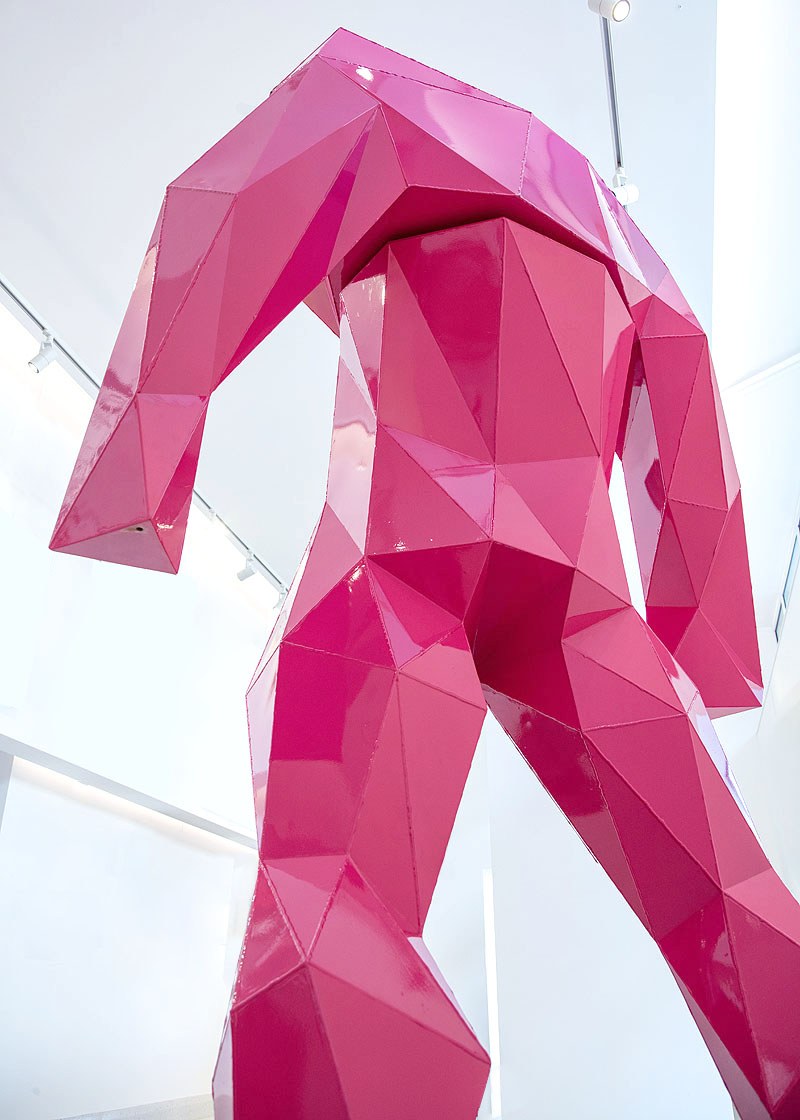
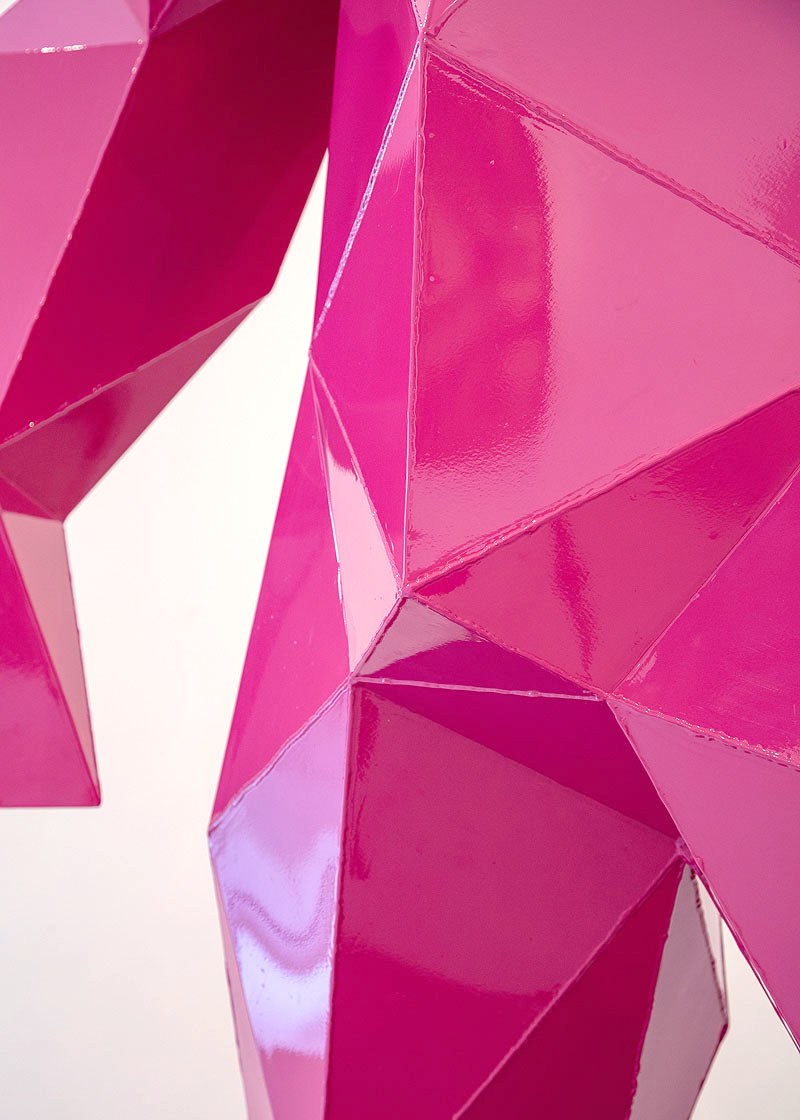
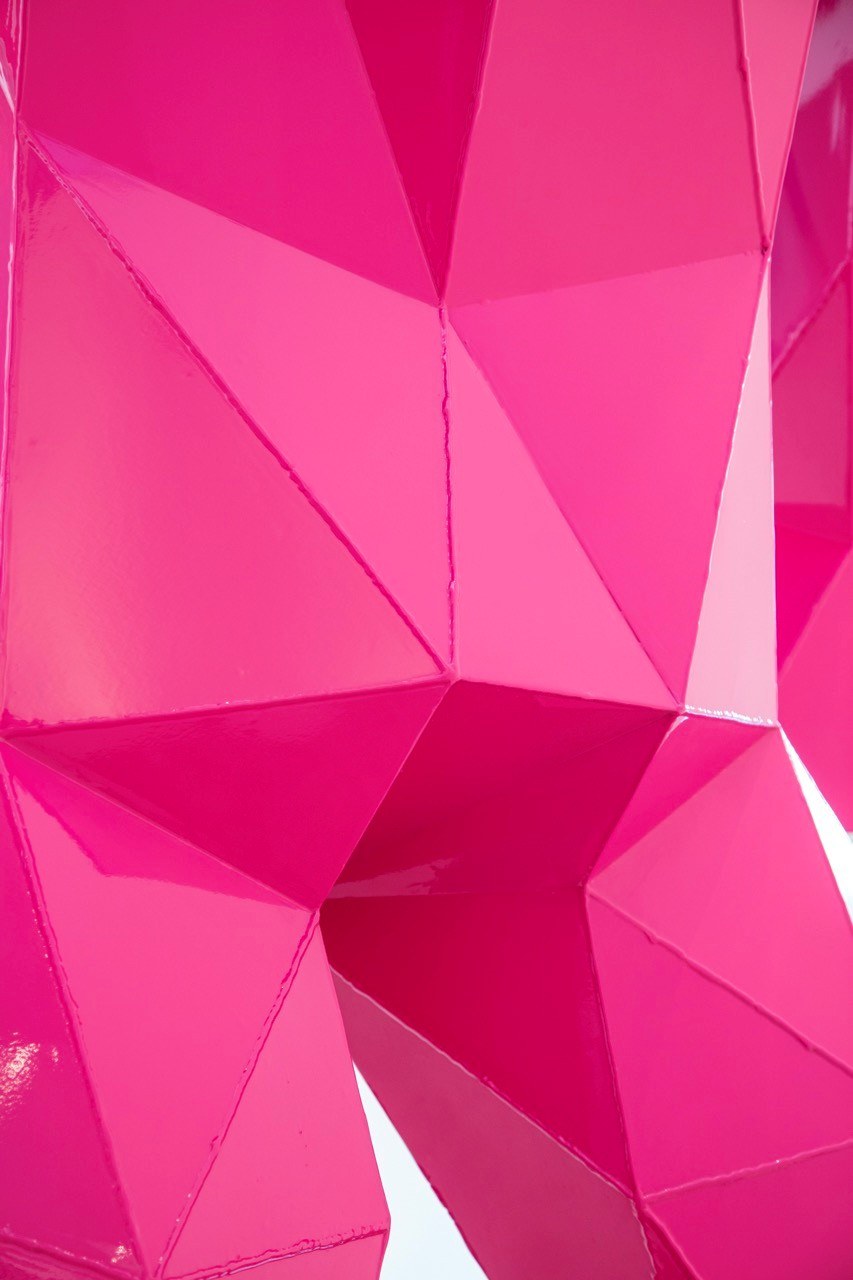
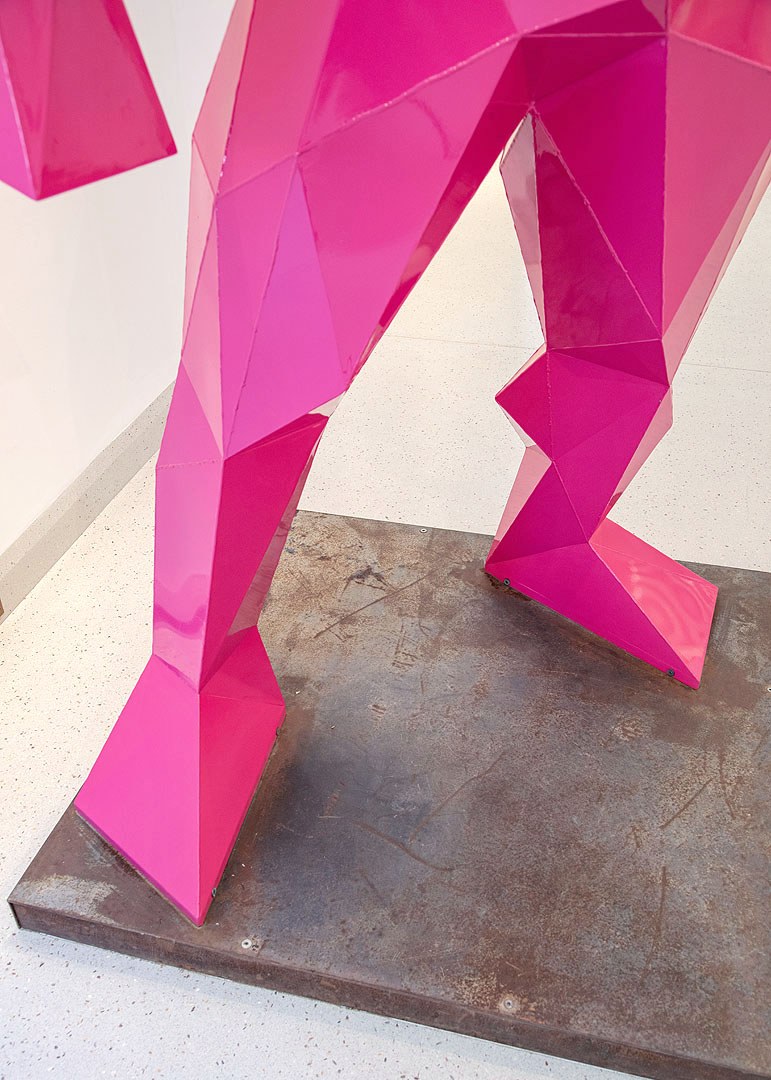
It is impossible to pass by Paweł Orłowski’s “Pink BOT” indifferently. Its muscular, heroic silhouette, rooted in the iconography of American superheroes, is constructed from steel triangles welded together—a characteristic element of the artist’s recognizable sculptural language. One might think that we are dealing with a futuristic cyborg, a product of the coming technological age. The idea behind the work, however, is not rooted in the future but in the present. “Pink BOT” is a human transformed by the system: geometrized, standardized, stripped of individual traits, yet still distinctly anthropomorphic. It has a head, arms, and legs, and maintains a monumental posture, but it lacks a face. It sits somewhere between a classical statue and a conceptual object—between an icon of strength and a symbol of cultural projection.
The sculpture catches the eye with its intense, Pop Art-style pink. The artist’s intention, however, is neither a simple joke nor irony. Hidden within the contrast of form and color lies the work’s central idea: a reflection on social constructs, the definition of gender identity, and inequalities. The muscular body, associated with strength, dominance, and the model of heroic masculinity, is juxtaposed with a color traditionally attributed to femininity. Orłowski plays with this tension, sending two seemingly contradictory messages: through form and through color. He shows that many notions regarding gender, social roles, and appearance stem from patterns that have been repeated for decades. “Pink BOT” tells the story of a programmed human—shaped by norms, expectations, and cultural divisions between what is “masculine” and “feminine.”
The meaning of pink, so crucial to the reception of the work, is also not unambiguous. As Katarzyna Rij notes in her curatorial text: “In art history, the color pink has served a variety of symbolic functions, evolving alongside social and cultural changes” (K. Rij, Paweł Orłowski. Pink BOT, Mazovian Center for Contemporary Art “Elektrownia” in Radom, Radom 2024, p. 5). As late as the 18th and 19th centuries, pink was sometimes associated with masculinity, high status, and elegance, while femininity was more often identified with the color blue. It was not until the 20th century, with the development of modern marketing and pop culture, that pink became strongly associated with femininity, cementing this code in the collective imagination.
The presented “Pink BOT” is one of seven sculptures created by the artist, which together formed a spatial installation exhibited in various public spaces. The project organized and enlivened the surrounding landscape while also sparking social discourse. The monumental, pink figure became a starting point for a conversation about how strongly stereotypes shape our thinking. Orłowski, however, does not propose unification or the erasure of differences; rather, he highlights the need for equal access to rights, opportunities, and responsibilities—despite our differences. “Pink BOT” encourages reflection on where tradition ends and dogma begins—and whether we can speak of identity without reflexively repeating cultural scripts.