


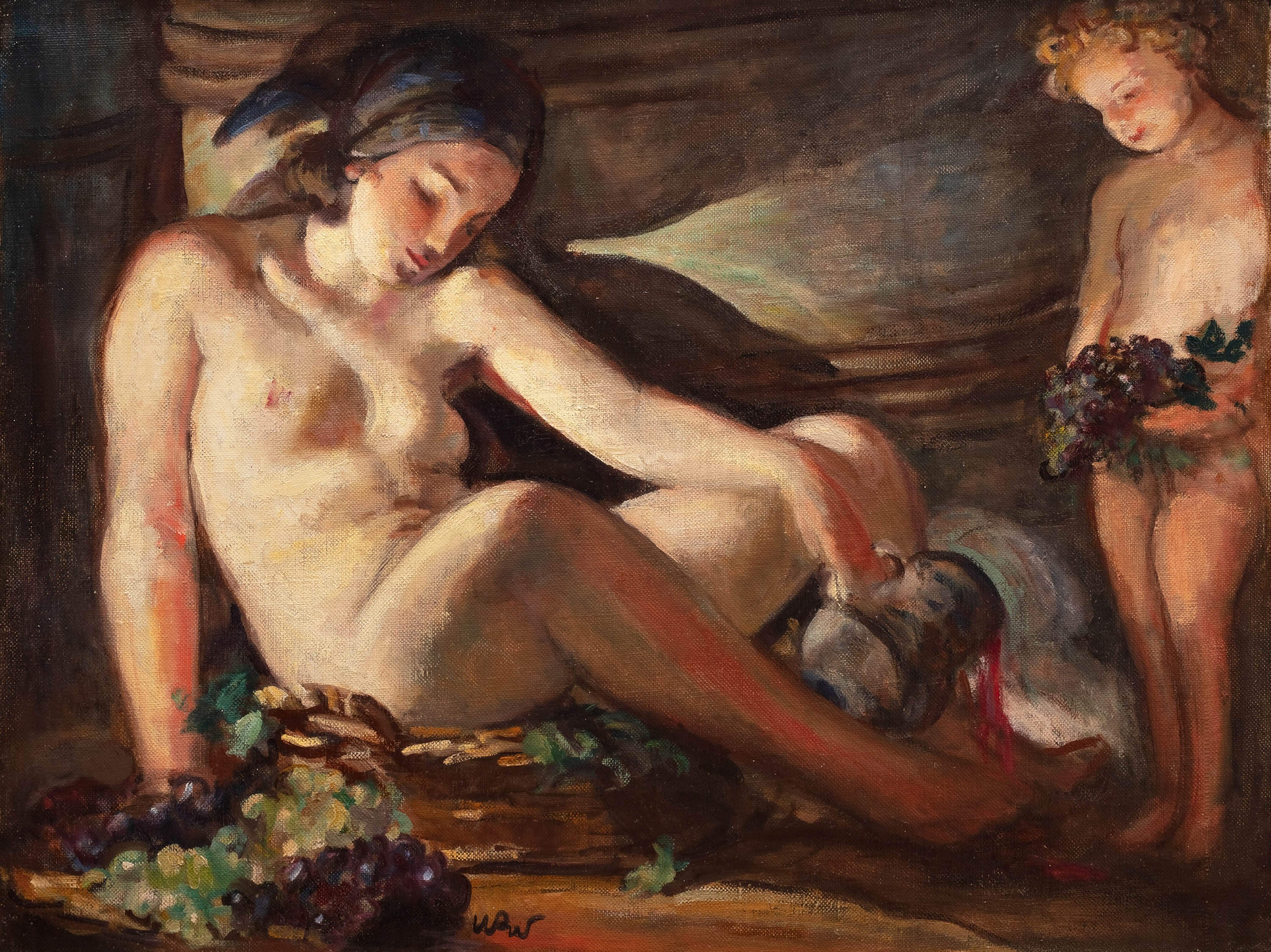
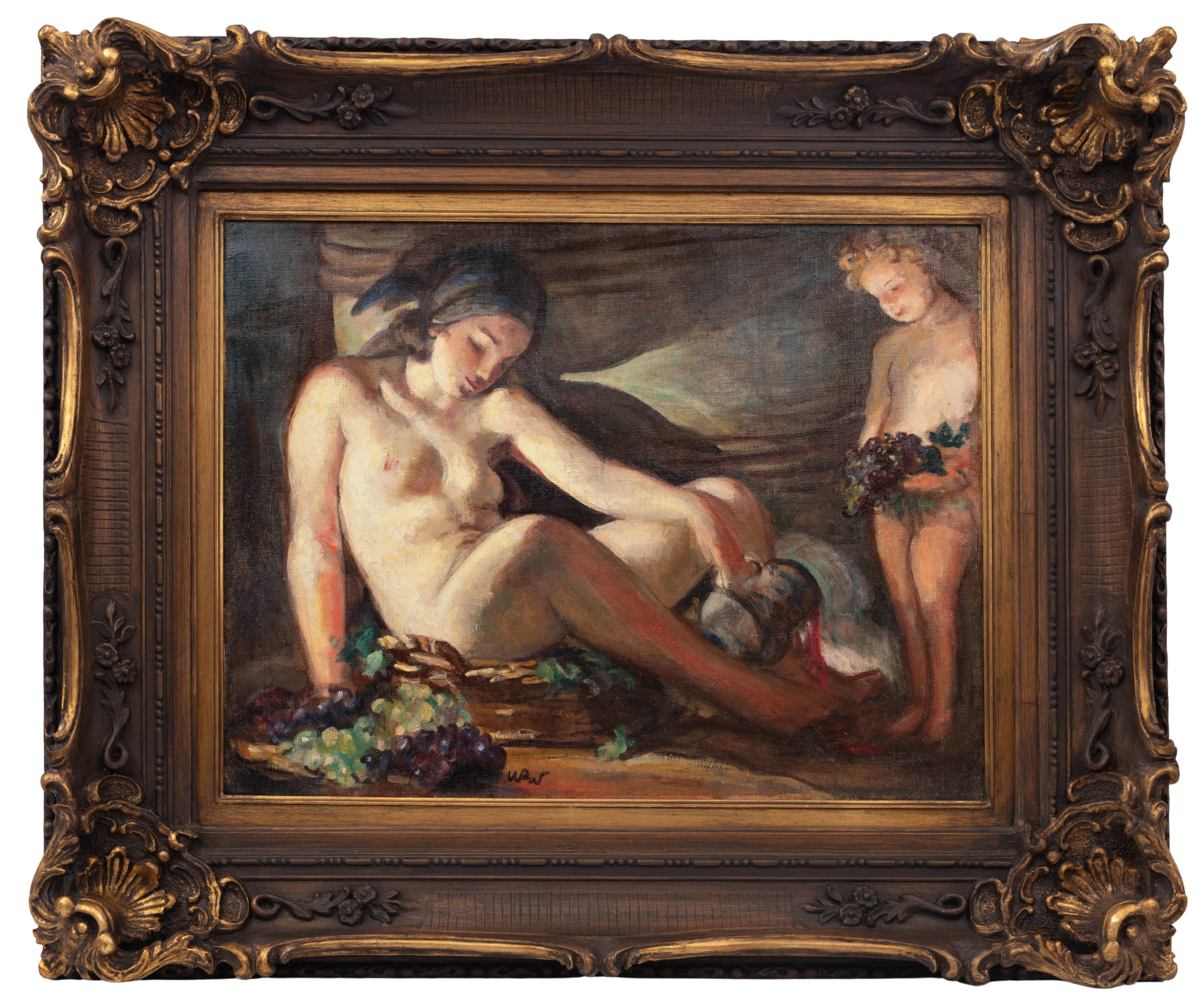
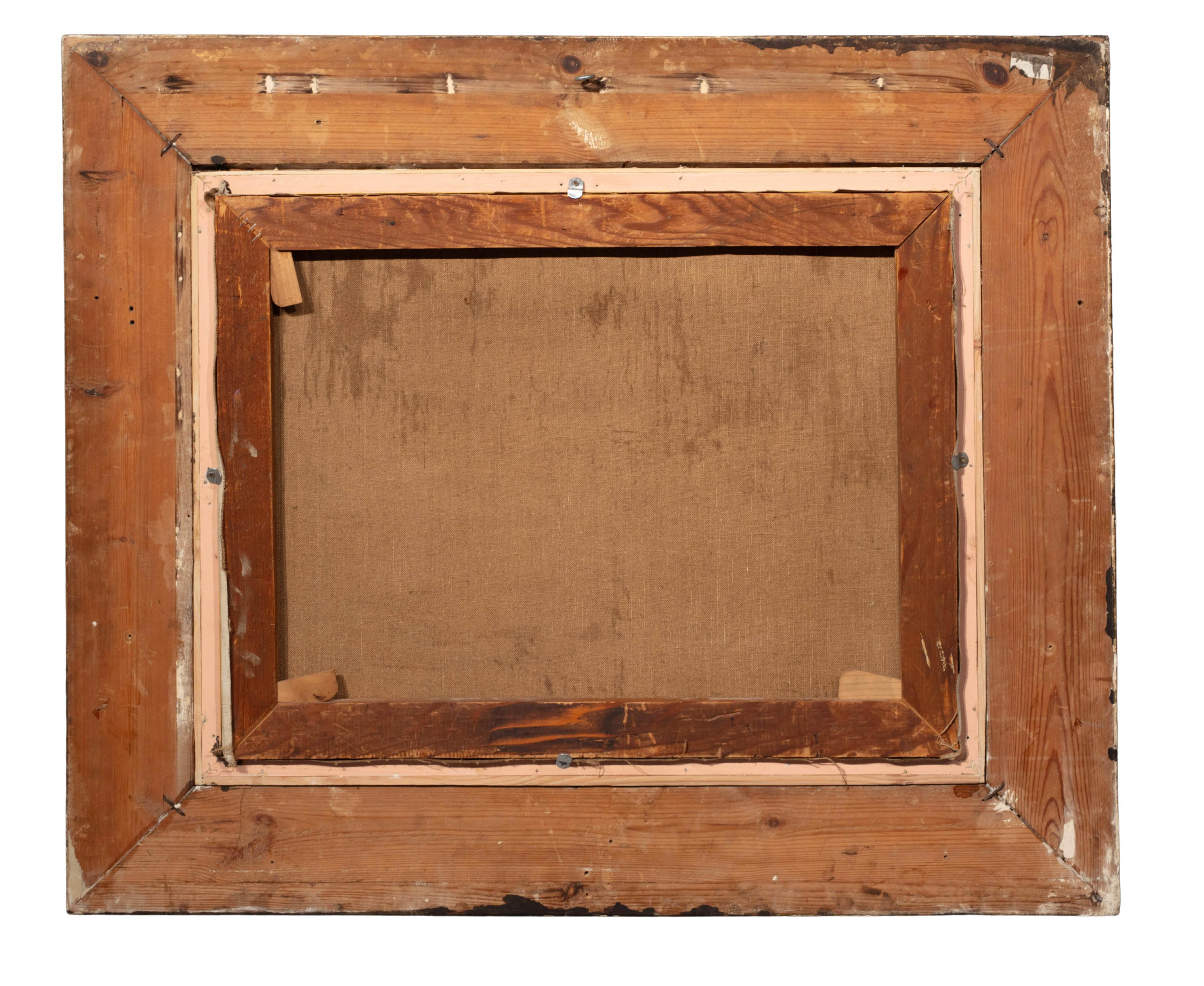
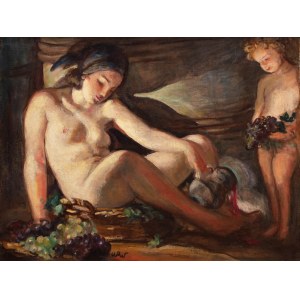
oil on canvas, 50.5 × 65.4 cm
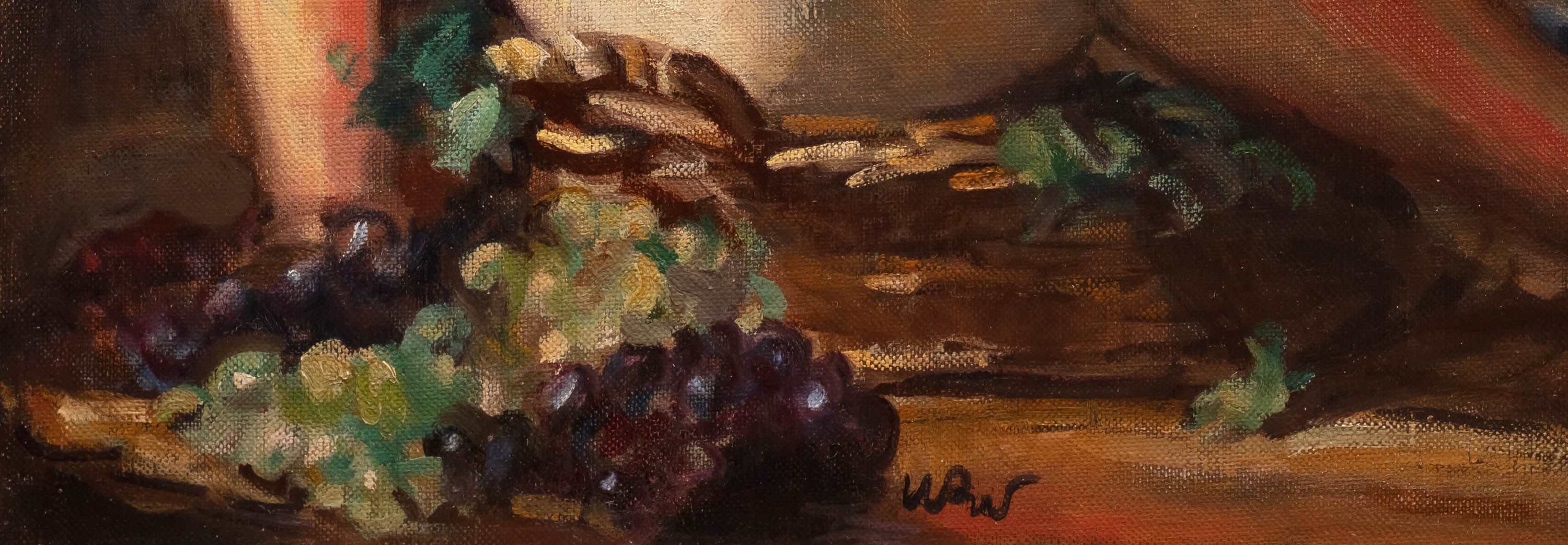
signed with a tied monogram in the center: “WW”
Provenance:
– Poland, private collection;
– Doyle New York, auction on September 16, 2020, lot 6;
– New Jersey, Montclair, collection of Dorothea Benton Frank;
– New York, Brooklyn, Lipert Gallery.
Wojciech Weiss was the undisputed master of the nude. With extraordinary sensitivity, he was able to reveal the beauty and sensuality of the female body in his compositions.
“This subject matter—the most luminous and the most sensitive, the most changeable and dependent on its surroundings—is the body! An eternal and wondrous source of study! In the delicate texture of the skin, in the fleeting reflections of the body, a painter can lose himself entirely and let that life fill him completely! As long as this sensual delight is not disturbed! As long as nothing is imposed upon it! —Preserve nature’s simple and clear expression!—That is why Weiss does not dictate poses to the model; he does not bend or twist the model’s limbs in search of unusual movements. He looks at the model. He observes him. He draws inspiration from him. Beauty is always natural. The most immortal poses are those created by nature itself. […] Weiss seeks in the nude neither philosophical meditations nor geometric contemplations nor architecture.... He does not turn women into columns—he simply wants to paint them in the radiance of their bodies—like a plucked flower, like ripe fruit cast among the clouds of fabric onto the whiteness of batiste! Like a jewel amidst a still life! To create ever-new orchestrations of the body’s colors and harmonize them with the drapery of their surroundings!—Like Titian or Tintoretto—to illuminate the background of his paintings with the pearlescent glow of a reclining body. —To bring out the translucency of the skin’s glazes, running through the entire range of tones from dark, brown, golden, or blood-red to light, silvery, and phosphorescent white.... To paint the white bodies of reclining Venuses, emerging from the white sea foam! From these reclining, lazy, and soft movements, from the repose of slender and supple bodies, casually cast upon white sheets or tucked into the corner of a sofa, from the nonchalance of carelessly curved thighs and hips, from the provocation of small, round, thrust-forward breasts, from the coquetry of legs tucked beneath one another—Weiss drew out an infinite wealth of motifs…” (Stanisław Świerz, “Wojciech Weiss,” [in:] “Sztuki Piękne,” Vol. 2, No. 4, 1925–26, pp. 152–154.)
Weiss often depicted his models in his studio, in natural rather than contrived poses. He also drew inspiration—both in composition and subject matter—from the classics of Old Master painting. Weiss’s women begin to appear like the beautiful Venuses of Renaissance canvases. Following this inspiration, Weiss painted, among other works, “Venus” in 1916 and “The Muses” in 1927. A sort of continuation of this trend is the painting “Grape Harvest. Bacchanalia” from 1937, presented at the auction. This work is identical to the painting “Drunken Girl,” created in the same year (reproduced in: “Records of Change: Polish Art from the Collection of Krzysztof Musiał,” exhibition catalog, ed. Barbara Ilkosz, Wrocław, 2007, p. 115.). Both scenes allude to the Dionysian festival. In the painting featured in the auction catalog, we see a nude girl lost in sleep—perhaps intoxicated by the wine spilling from a jug she holds loosely onto her feet. Her naked, sensual body is enveloped by warm light streaming in from the left side of the painting’s frame, highlighting the beauty of her alabaster figure. The painting up for auction features a more elaborate composition—on the right, Weiss depicted a cherub with golden curls watching over the sleeping girl, holding a bunch of grapes.










Nylig set
Log ind for at se genstandslisten
Favoritter
Log ind for at se genstandslisten